UPGA Website
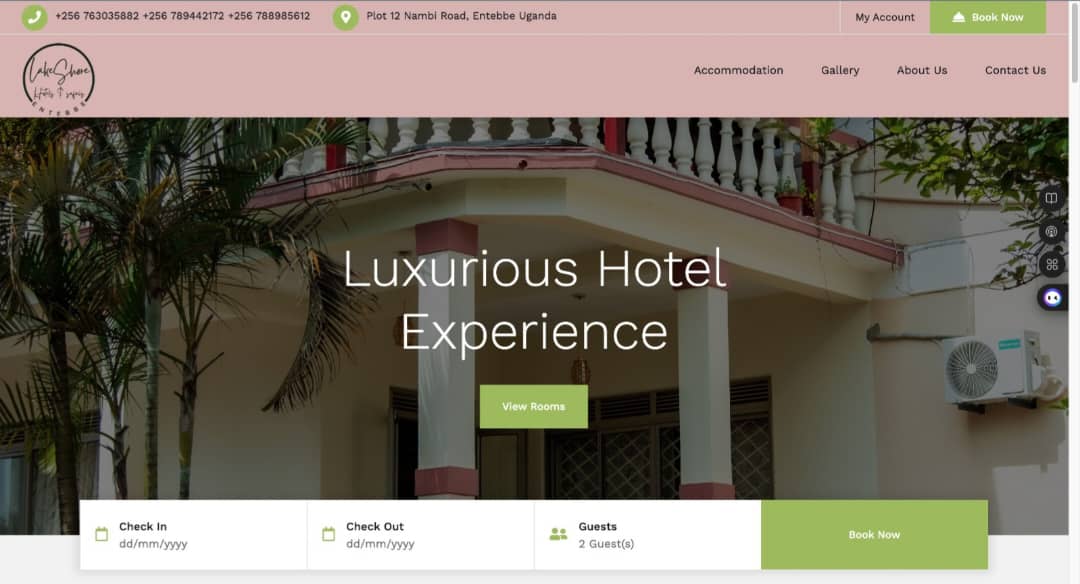
A dynamic platform for the Uganda Professional Golfers Association with a CMS for easy updates, featuring news, member profiles, tournament schedules, and resources to engage golfers and promote golf in Uganda.
7
content types the association edits itself
Live
tournament status, one tick in the CMS
2012
the history the design had to live up to
01
The challenge
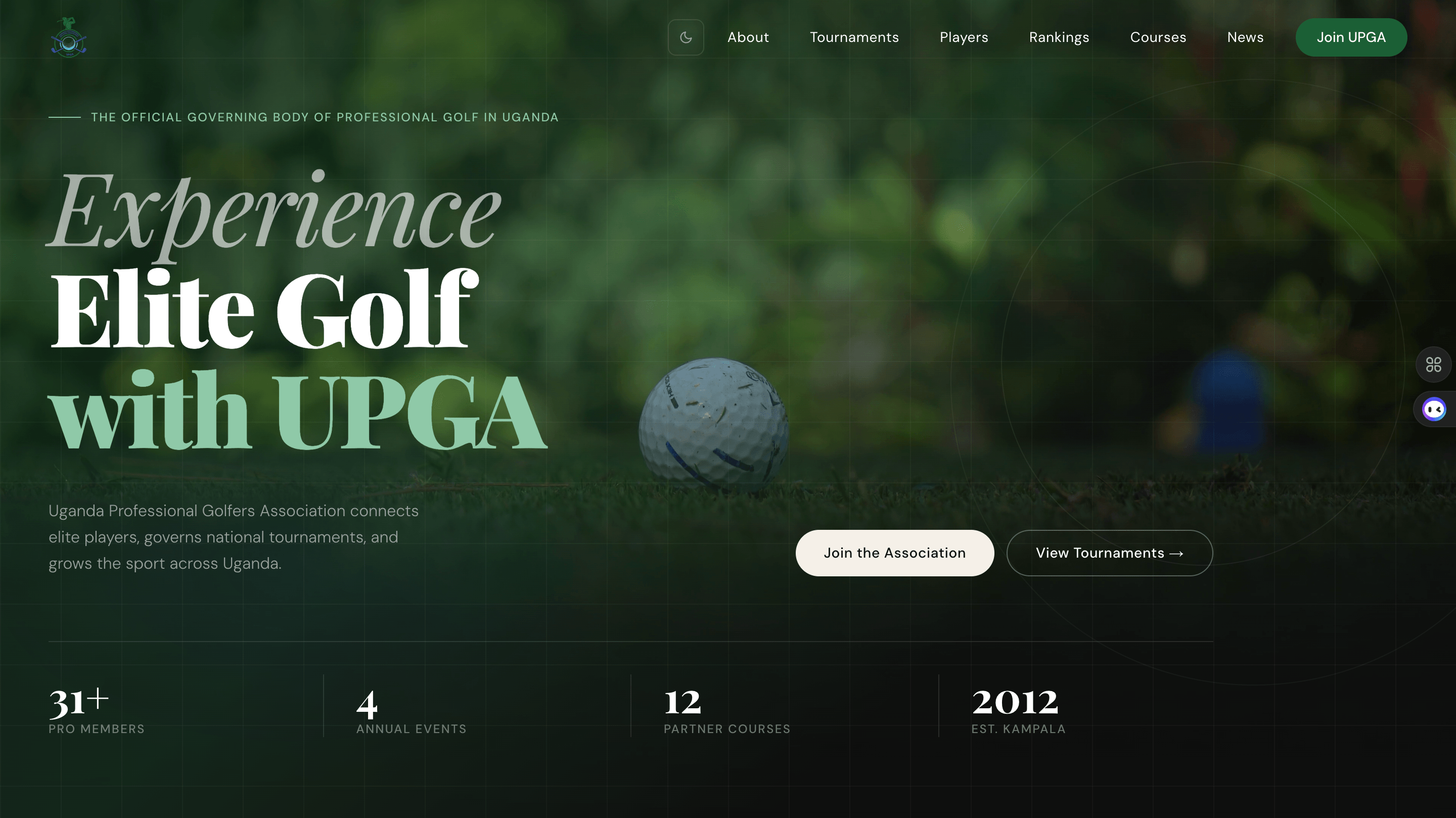
UPGA has run professional golf in Uganda since 2012, and its website needed to carry that standing. Its audience is broad: players checking where they stand, fans following a round on a phone, sponsors weighing whether the tour is worth backing, and journalists after results.
The brief came down to one line. A first-time visitor should conclude "this is serious professional golf" without reading a paragraph.
02
Our approach
We set three rules and designed against them: the game speaks first, elite before busy, and stats as identity. Course photography and player faces carry each page, and rankings and scores are set with the typographic care most sites save for headlines. The palette is dark with green as the sport's signature, and the PGA Tour, the European Tour and The R&A were the reference points, not other association sites.
The structure follows what each visitor came for: Tournaments, Rankings, News, Courses, Membership and Contact. Tournaments can be flagged Live, which puts a pulsing red marker and a live banner on the site without anyone touching code. Rankings update the moment results are entered.
Everything is managed in an embedded Sanity Studio at /studio: players, tournaments, courses, board members, sponsors and news. Courses added there appear as options in the membership application form automatically. Because most fans read on mobile networks, pages are statically generated and refreshed by webhook, so they load fast and stay current.
03
The outcome
UPGA now has a site that matches the standard of the golf, and the association runs it on its own. We handed over a written manual covering every content type, the forms, SEO and deployment, so the site does not depend on us to stay up to date.
Building something like this? Let's talk.
Start a project→